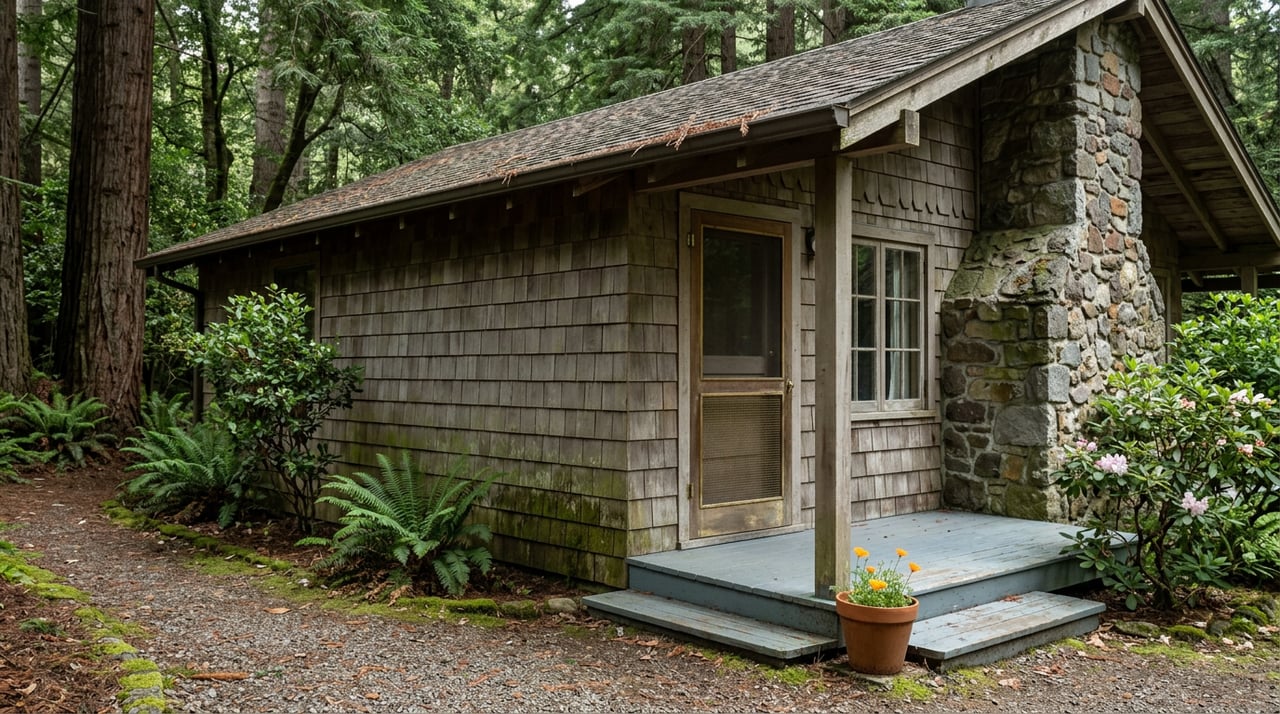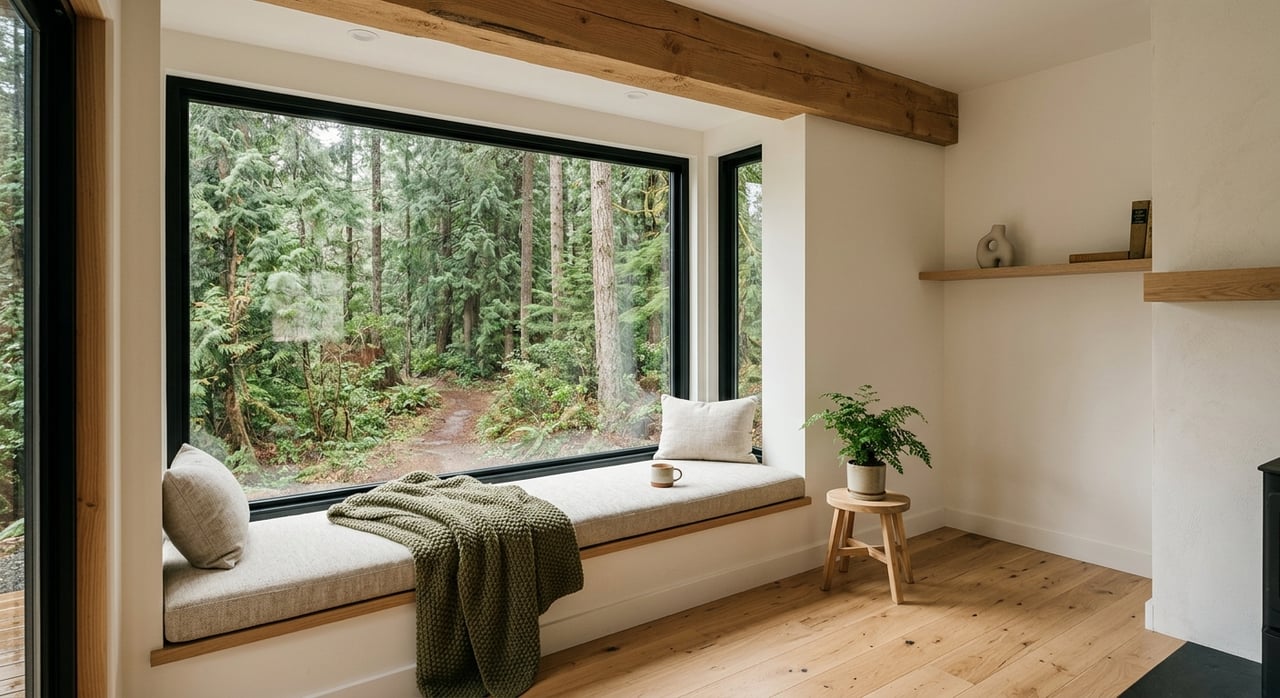
Looking for a quieter way of life in Sonoma County? Camp Meeker has a distinct cabin-country feel that stands apart from more conventional neighborhoods. If you are drawn to redwoods, creekside scenery, and homes with character, this guide will help you understand what cabin living here is really like, from property patterns to day-to-day logistics. Let’s dive in.
Why Camp Meeker Feels Different
Camp Meeker is a small West Sonoma County community shaped by Bohemian Highway, redwood forest, and Dutch Bill Creek. Its identity is closely tied to long-standing community landmarks, including Anderson Hall, creek access areas, and the local post office, which the Camp Meeker Recreation and Park District describes as a community meeting point and symbol of identity since 1900.
That sense of place is not accidental. The area’s history includes logging, rail service, rustic resort buildings, summer homes, and old cabins, which helps explain why Camp Meeker still feels more like a wooded retreat than a typical subdivision. You can see that history reflected in the district’s community background and historical gallery.
What Cabin Living Looks Like
Cabin living in Camp Meeker can mean different things depending on where you are in the area. The 2021 Camp Meeker Community Wildfire Protection Plan estimated about 390 homes and 636 structures in the planning area, with most residential parcels concentrated in the Camp Meeker neighborhood itself.
In the core residential area, average lot sizes are about 1/6 acre. Along north Bohemian Highway, average parcel sizes are closer to 4 acres, and larger properties in the planning area range from roughly 70 to more than 300 acres. Those larger parcels are used as camps, retreat centers, preserves, ranches, and residences, creating a mix of smaller cottages and more expansive forest properties.
The local water system supplies 365 residences, which is another useful reminder that each property deserves careful review. In a place like Camp Meeker, the details of water, access, and site conditions matter as much as square footage or style.
Who Camp Meeker Fits Best
Camp Meeker tends to appeal to buyers who want privacy, trees, creek access, and a slower pace. It can be a strong fit if you value a simple cabin lifestyle, a creative retreat setting, or a home base that feels tucked into the forest.
At the same time, this is not a plug-and-play suburban setting. The area is generally better suited to buyers who are comfortable with a more self-reliant rhythm and who are willing to evaluate things like utility service, road access, and wildfire readiness on a property-by-property basis.
Daily Life in Camp Meeker
One of the biggest draws here is the landscape itself. The Camp Meeker Forest Open Space Preserve covers 356 acres and is protected by conservation easement. It is described as a redwood and Douglas-fir forest with 1.8 miles of Dutch Bill Creek along its edge.
That kind of setting shapes everyday life. Instead of a dense suburban grid, you have a place where forest, creek corridors, and winding roads play a major role in how the community feels and functions.
Community identity also runs deep. The district’s preservation work around the Camp Meeker post office reflects how important small shared places can be in a community with a long retreat and cabin tradition.
Access and Transportation
If you are considering cabin living here, it helps to plan with the road network in mind. The Community Wildfire Protection Plan identifies Bohemian Highway as the main arterial road and notes that there are only two evacuation options within the planning area.
It also states that many surrounding roads are narrow, steep, and short on turnouts. That can affect everything from your daily drive to delivery access to emergency planning, so road conditions should be part of your home search from the start.
Public transit is available, though it is geared more toward regional connections than dense local circulation. Sonoma County Transit Route 28 directly serves Camp Meeker and Occidental, while Route 20 connects Sebastopol with west county communities including Graton, Forestville, Rio Nido, Guerneville, and Monte Rio.
Wildfire Readiness Matters
In Camp Meeker, wildfire planning is not a side issue. The planning area is in the State Responsibility Area, and the CWPP highlights limited evacuation options, narrow roads, and communication challenges as key local concerns.
The report also notes that many residents lack reliable internet and cellular service. That is important for everyday expectations, but it is especially important when thinking about alerts, coordination, and preparedness.
Wildfire resilience is also part of the area’s open-space planning. The preserve project is described as supporting forest and fuel management while increasing resiliency for local residents, which adds helpful context for anyone buying in a heavily wooded setting.
Can You Have a Tiny Home?
This is a common question, especially for buyers drawn to Camp Meeker’s cabin character. Sonoma County says tiny houses on wheels are allowed only on a temporary basis under certain circumstances.
If a tiny home is on a permanent foundation and used as an ADU, it must meet local and state building, fire, and zoning rules. Permit Sonoma also notes that ADUs are allowed in addition to a primary residence, which can be relevant if you are exploring a flexible long-term property setup.
The key is not to assume. If you are considering a tiny-home concept, guest space, or an accessory structure, you will want to verify the legal status and development potential of that specific property before making a move.
What to Check Before You Buy
Cabin properties can be wonderfully distinctive, but they often require more due diligence than a home in a standard subdivision. In Camp Meeker, a thoughtful review can help you avoid surprises and choose a property that truly matches your lifestyle.
Here are a few practical items to evaluate:
- Access: Review road width, grade, turnouts, and how easy the property is to reach year-round.
- Utilities: Confirm water service, internet availability, cellular reliability, and any other service limitations.
- Property use: Verify legal status for cabins, ADUs, or tiny-home plans through the appropriate county channels.
- Wildfire readiness: Understand evacuation routes, defensible-space considerations, and site-specific vegetation conditions.
- Parcel pattern: Consider whether you want a smaller home in the residential core or a larger forest parcel with more separation.
These details do more than protect your investment. They help you understand how the property will actually feel to own and use over time.
Why Buyers Need Local Guidance
Camp Meeker is one of those places where the map only tells part of the story. Two homes may look close together on paper but offer very different experiences depending on road access, lot size, tree cover, utility setup, and how the property sits in the landscape.
That is why local guidance matters so much in a niche market like this. When you are buying a cabin, cottage, or forested property in West Sonoma County, you need more than a basic search. You need clear context about the lifestyle, the tradeoffs, and the questions worth asking before you write an offer.
If you are exploring cabin living in Camp Meeker or preparing to sell a home with this kind of unique appeal, Donna Nordby can help you navigate the details with thoughtful, place-based guidance.
FAQs
What is cabin living like in Camp Meeker?
- Cabin living in Camp Meeker typically means a forested setting, a slower pace, and homes that range from smaller cottages in the residential core to larger parcels farther out along Bohemian Highway.
Are Camp Meeker roads easy to navigate year-round?
- Not always. The local wildfire plan notes that many roads are narrow, steep, and limited in turnouts, so access should be reviewed carefully for any property you are considering.
Is wildfire planning important for Camp Meeker homebuyers?
- Yes. The planning area is in the State Responsibility Area, and the local CWPP highlights limited evacuation options, road constraints, and communication challenges.
Can you place a tiny home in Camp Meeker?
- Possibly, but it depends on the setup. Sonoma County says tiny houses on wheels are allowed only temporarily under certain circumstances, while permanent-foundation tiny homes used as ADUs must comply with applicable building, fire, and zoning rules.
Does Camp Meeker have public transit access?
- Yes. Sonoma County Transit Route 28 directly serves Camp Meeker and Occidental, with additional regional connections through west county routes.
What makes Camp Meeker different from other Sonoma County communities?
- Camp Meeker has a long retreat-and-cabin history shaped by redwood forest, Dutch Bill Creek, and community landmarks like the post office and park district spaces, giving it a distinctly rustic and place-based character.